Bedroom Air Purifier Sizing Guide: CADR, Noise, and Placement Before You Buy
Choose a bedroom air purifier by room size, CADR, low-speed noise, filter costs, and placement instead of a vague whole-home claim.
For readers comparing sleep-product options before buying.
Buyer's Guide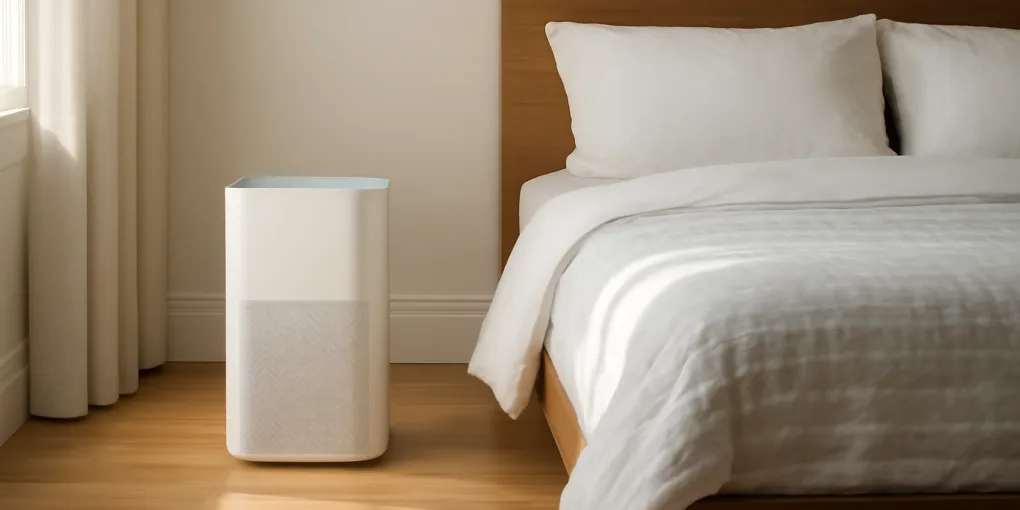
Blueair Blue Pure 411i Max
Best compact-room shortlistBest use: A smaller bedroom where footprint and low-speed sound matter
Quick picks
Blueair Blue Pure 411i Max
★ Top pick Best compact-room shortlist- Best use: A smaller bedroom where footprint and low-speed sound matter
- Caveat: Confirm the current CADR, replacement-filter schedule, and clearance instructions for the selected listing.
Coway AP-1512HH Mighty air purifier
Best medium-room shortlist- Best use: A typical bedroom that needs more airflow than a tiny desktop unit can provide
- Caveat: A larger unit may be louder or more visible at the bedside; use its low setting only after confirming it still suits the room.
Winix 5500-2 air purifier
Best filter-maintenance shortlist- Best use: A shopper willing to compare prefilter cleaning and replacement-filter availability
- Caveat: Check the exact filter set, optional modes, and current ozone-related settings before purchase.
A bedroom air purifier is a room-sizing purchase, not a promise of better sleep. The useful question is whether the unit can move enough air for your actual bedroom without making enough sound, light, heat, or maintenance work that you switch it off.
Use this guide when dust, outdoor smoke, pet dander, or a nearby traffic source makes you consider a purifier. If the room feels dry or damp, measure that first with our bedroom humidity monitor guide. If the problem is temperature or bedding heat, an air purifier is the wrong first tool; see our cooling sheets versus mattress pad guide.
Quick picks
- Small bedroom, modest footprint: See current options for a compact-room candidate. Confirm its current CADR and low-speed sound rating, not only the headline room size.
- Typical bedroom, more airflow: See current options when a medium-room unit fits the floor plan and the filter cost is acceptable.
- Maintenance details matter most: See current options when you will compare prefilter cleaning, replacement filters, and settings before checking out.
These are shopping paths, not claims that a purifier treats a medical condition or removes every indoor-air problem. Confirm the selected model, seller, filters, warranty, return terms, and current price before purchase.
Size the purifier for the room, not the whole home
Measure the bedroom’s length and width, then note ceiling height. A 12-by-14-foot room with an 8-foot ceiling contains about 1,344 cubic feet. That volume is more useful than a marketing label because air-cleaner claims can use different air-change assumptions.
CADR, or clean air delivery rate, is a standardized comparison measure for smoke, dust, and pollen under a test method. Higher is not automatically better for a bedroom: the unit must also fit the room, be run at a tolerable speed, and have filters you will replace. EPA guidance recommends matching the device to room size and using its CADR information as part of the decision.
Before you buy, look for the manufacturer’s stated room-size basis, the CADR where available, and the speed used for that claim. A unit that reaches a large-room figure only on its loudest setting may be a poor nighttime fit if you cannot sleep with that setting running.
Choose by the bottleneck you actually have
| Bedroom situation | Better starting feature | What to verify |
|---|---|---|
| Small room with limited floor space | Compact footprint and low-speed noise | Intake clearance, outlet location, filter access |
| Standard bedroom near a busy road | CADR that matches the actual room | Sound at the speed you can tolerate overnight |
| Pet hair or visible dust | Easy prefilter cleaning | Filter schedule, vacuuming instructions, replacement availability |
| Light sleeper | Display dimming and stable low setting | Indicator lights, auto-mode changes, fan tone |
| Damp, musty, or visibly moldy room | Source control first | Leak, ventilation, and building-maintenance response |
Blueair Blue Pure 411i Max
See current options if the bedroom is compact and a larger appliance would block a walkway. The decision factors are its stated coverage at a realistic speed, the space around its intake and outlet, and the replacement-filter schedule. A small unit can be a sensible fit when it is not tucked behind furniture or asked to clean an open-plan floor it cannot realistically serve.
Coway AP-1512HH Mighty air purifier
See current options if the room needs a medium-size airflow candidate and you can reserve a stable floor location. Check the manual for clearance, whether automatic modes change the fan sound during the night, and the price and availability of the exact replacement filter. Skip it if the only place it can sit is directly beside the pillow or pressed into a corner.
Winix 5500-2 air purifier
See current options if you are prepared to maintain a prefilter and compare the current settings carefully. Its fit depends less on a brand name than on the exact filter set, local replacement supply, and any optional ionization or similar mode. Review the current manual and turn off any feature you do not want rather than assuming every setting is necessary for a bedroom.
Placement matters as much as the box rating
Put the purifier on a stable, hard surface or floor location with open space around its intake and exhaust. Do not hide it behind a curtain, under a bedside table, or against bedding. The air needs a clear path through the machine and across the room.
Keep the product manual handy; it is the source for the selected model’s clearance, electrical, and filter instructions.
Keep it far enough from the bed that the draft and fan tone are not aimed at your face, but close enough to avoid a blocked corner. Avoid placing it beside a humidifier plume, open window, or supply register; each can make it work harder without showing what room air is actually like. Follow the model manual for its clearance requirements and electrical safety.
For the first few nights, choose one setting and listen for fan cycling, display light, and vibration. Auto mode can be convenient, but a sudden speed change can bother a light sleeper. A consistent low or medium setting may be more usable if it still matches the room-size decision.
Test the fit during the return window
Run the purifier in the location and at the speed you expect to use after the return window closes. On the first night, notice whether the fan tone, air movement, indicator light, or vibration wakes you. On the next night, keep the setting the same and check whether doors, windows, or HVAC cycles change the experience. Changing every setting at once makes it impossible to tell whether the appliance actually fits the room.
Then test the maintenance path. Remove the filter cover, identify the filter model, and confirm you can reach the prefilter without moving the bed. A unit that requires furniture to be dragged every time it is serviced may be technically capable but practically wrong for the bedroom. Keep the packaging until you know the selected size, fan sound, and placement are workable.
Finally, keep expectations narrow. A cleaner can reduce some airborne particles when correctly sized and maintained, but it cannot show what it has removed without appropriate measurement. Choose it because its operating requirements suit the room, not because a label promises a particular sleep outcome.
One practical check is to keep the bedroom door and windows in the pattern you normally use daily. An open door changes the effective space the unit is serving; an open window can continuously add outdoor particles. Neither situation means the purifier has failed, but both change the sizing calculation. Record these conditions before deciding a larger model is necessary.
Filter costs are part of the product cost
The purchase price is only the opening cost. Check the exact replacement filter name, how often the maker says to replace it, whether a prefilter can be cleaned, and whether subscriptions are optional. Do not wash a disposable filter unless the maker explicitly says it is washable; that can damage the media or void instructions.
Keep a simple replacement reminder based on the manual and your home’s conditions. A home with pets, open windows, smoke events, or construction dust may load a filter faster than a sealed low-dust room. A filter indicator is a cue, not a substitute for checking the manual and the physical condition of the filter.
What an air purifier cannot fix
An air cleaner does not repair a wet wall, remove a mold source, replace ventilation, stop a gas leak, or solve a carbon-monoxide concern. EPA guidance stresses source control and ventilation as core indoor-air measures. If there is visible growth, persistent musty odor, water damage, combustion concern, or worsening breathing symptoms, address the underlying cause through the appropriate property, health, or emergency channel.
Nor is a purifier a substitute for cleaning bedding, vacuuming, or keeping pets out of a bedroom when that is your household plan. It can be one layer in a practical routine. The correct purchase is the one whose airflow, placement, sound, and upkeep you can sustain.
Bedroom air purifier FAQ
What size air purifier should I get for a bedroom?
Measure the room and compare the model’s CADR and stated room-size basis with the speed you can realistically run at night. Do not rely on a whole-home claim or a room figure that assumes an uncomfortably loud speed.
Should I run a bedroom air purifier all night?
You can if the device is placed safely, its sound and lights do not disturb you, and you follow the maker’s maintenance instructions. Start with a stable setting instead of changing several bedroom variables at once.
Can an air purifier fix a musty bedroom?
No. A musty odor or visible mold can signal a moisture problem. Identify the leak, condensation, ventilation, or material issue first; a purifier does not remove the source.
Sources
- EPA: Guide to Air Cleaners in the Home
- AHAM: Air Filtration Standards and Clean Air Delivery Rate
- EPA: The Inside Story, a guide to indoor air quality
Frequently Asked Questions
- Start with the room's length, width, and ceiling height, then compare the manufacturer's room-size basis and CADR. A claimed room size is useful only when you know the air-change assumption behind it.
- It can run overnight if its sound, light, placement, and maintenance are acceptable. Use a stable setting that does not disturb sleep and follow the maker's safety instructions.
- No. It may reduce some airborne particles, but it does not repair moisture intrusion, visible mold, leaks, or a dirty HVAC system. Find and address the source first.