Cool-Mist vs Evaporative Humidifier for a Bedroom: Choose by Cleaning and Room Fit
Compare ultrasonic cool-mist and evaporative bedroom humidifiers by cleaning routine, mineral dust, tank size, filter costs, and placement.
For readers who want the practical limits before acting on a sleep claim.
Evidence Explainer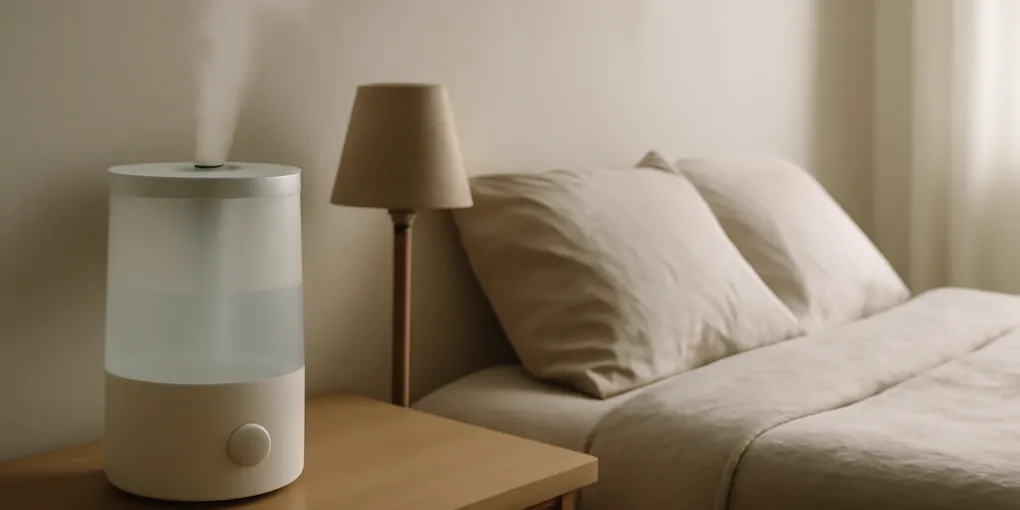
Quick picks
| Product | Key Specs |
|---|---|
| See price on Amazon |
|
| See price on Amazon |
|
Product availability, certifications, and retailer details can change; check the current Amazon page before buying.
The most useful humidifier choice is not the one with the biggest tank. It is the one whose water changes, cleaning, mineral management, filter purchases, sound, and placement you can keep up with without making the bedroom damp.
Choose this comparison only after you have a reason to add moisture. A simple bedroom humidity monitor can show whether dry conditions are a pattern rather than a one-night feeling. If the room is humid, has window condensation, or smells musty, do not add a humidifier; investigate the moisture source instead.
Quick comparison
- Want a compact ultrasonic unit: See current options when you can empty, rinse, and clean it on schedule and have a plan for low-mineral water if the manual recommends it.
- Prefer an evaporative setup: See current options when you accept a fan and wick replacement in exchange for an evaporative format.
Check the exact listing’s tank size, stated run time, filter requirements, care instructions, seller, return terms, and current price. A humidifier is not a treatment for congestion, insomnia, asthma, or a respiratory illness.
The practical difference
| Question | Ultrasonic cool-mist | Evaporative cool-mist |
|---|---|---|
| How moisture is made | A vibrating element creates a fine mist | A fan moves air through a wet wick or filter |
| Main ownership burden | Daily water handling and mineral-dust prevention | Wick replacement, fan sound, and regular cleaning |
| What to check first | Tank opening, cleaning reach, water recommendation | Exact wick availability and low-speed noise |
| Common wrong use | Pointing visible mist at bedding or a wall | Ignoring a dirty or overdue wick |
Both types can add moisture. Neither should be treated as a set-it-and-forget-it appliance. EPA humidifier guidance emphasizes using and maintaining units carefully because poorly maintained equipment can disperse microorganisms or minerals.
Choose ultrasonic when compactness and cleaning access win
See current options for the Pure Enrichment MistAire Ultrasonic Cool Mist Humidifier if you want an ultrasonic form factor and can inspect the tank and base every day. Before purchase, look at the fill opening, whether you can reach the surfaces that need cleaning, how the manual handles water changes, and where you will set the unit.
With ultrasonic models, minerals in tap water can settle as deposits and may show up as fine dust. EPA specifically notes this concern for ultrasonic humidifiers. Do not assume a generic filter or additive solves it. Read the manual for the exact model, consider distilled or low-mineral water where appropriate, and clean the unit on the schedule it gives.
Skip this route if you know the tank will sit full for days, if the only placement is on carpet beside the bed, or if you do not have a realistic cleaning routine. A smaller unit that gets emptied and cleaned is usually a better ownership fit than a larger unit that is neglected.
Choose evaporative when the wick routine suits you
See current options for the Honeywell HCM350W Germ-Free Cool Mist Humidifier if an evaporative shortlist fits you. The core tradeoff is clear: the wet wick and fan add parts and sound, but the format avoids some of the mineral-dust behavior associated with ultrasonic mist.
Before buying, find the exact replacement wick model and current availability, then check the manual’s cleaning steps and the fan’s sound at the speed you would use overnight. Do not treat a wick as permanent. Its replacement schedule and visible condition are part of the ongoing cost.
An evaporative unit is a poor fit if fan sound wakes you easily or replacement wicks are hard to obtain. It is a better fit when you prefer a device whose maintenance plan is explicit and you will actually follow it.
Place it to humidify the room, not the pillow
Set the humidifier on a stable, water-resistant surface with open space around it. Aim mist away from the bed, walls, wood furniture, power strips, and electronics. Do not put it directly on carpet or tuck it behind a nightstand where wet air collects.
Start at a modest output and use the same location for several nights. Watch for window condensation, damp fabric, wet surfaces, or a rising humidity reading. Those are signals to reduce output, move the unit, or address room ventilation. More mist is not a better result.
For a bedroom with a closed door, placement and duration can matter more than tank size. A large machine can over-humidify a small, poorly ventilated room. The goal is a stable room condition, not a visible cloud.
Build the maintenance routine before checkout
- Decide where you will empty and refill the tank daily.
- Confirm whether you will use distilled, low-mineral, or tap water based on the manual and local water conditions.
- Identify the cleanable parts and the required cleaning interval.
- For evaporative models, price the correct wick and set a replacement reminder.
- Keep the unit dry before storage and never leave stagnant water in it between uses.
This routine is not optional product fine print. It is the reason one humidifier can be practical in a bedroom and another can become an avoidable hygiene problem.
When a humidifier is not the purchase to make
Skip the humidifier if your hygrometer repeatedly reads above the EPA household range, windows sweat overnight, there is a musty odor, or water damage is present. For an ultrasonic model such as the MistAire, visible dampness around the nightstand or white dust is a reason to stop and reassess water, output, and placement. For an evaporative model such as the HCM350W, a damp room is not a cue to install a fresh wick and keep increasing output. Address leaks, bathroom steam, ventilation, and building maintenance. A humidifier cannot repair a moisture source and can make the problem worse.
Seek appropriate professional or emergency help for visible mold, persistent water damage, suspected carbon monoxide, or significant breathing symptoms. A consumer appliance cannot diagnose or treat those situations.
Cool-mist vs evaporative humidifier FAQ
Is ultrasonic or evaporative better for a bedroom?
Pick ultrasonic if compact design and a disciplined cleaning and mineral-management routine fit your home. Pick evaporative if you accept a wick and fan and want that maintenance tradeoff. Compare the exact manuals, not just category labels.
Should I use tap water in a bedroom humidifier?
Follow the model manual. EPA notes that tap-water minerals can create deposits and may become mineral dust with ultrasonic units. Distilled or low-mineral water may reduce that burden for some setups.
Can a humidifier run next to the bed?
It should sit on a stable water-resistant surface with the output directed away from pillows, walls, and electronics. Leave room around it and use a humidity monitor to avoid turning the bedside area damp.
Sources
- EPA: Use and Care of Home Humidifiers
- EPA: The Inside Story, a guide to indoor air quality
- Mayo Clinic: Humidifiers and indoor allergies
Frequently Asked Questions
- Neither is automatically better. Ultrasonic units can be compact but need careful mineral and cleaning management; evaporative units use a fan and wick, so filter cost and sound become central tradeoffs.
- Follow the exact manual. EPA notes that minerals in tap water can contribute to deposits and, with ultrasonic units, mineral dust; distilled or low-mineral water may reduce that burden.
- Keep it on a stable, water-resistant surface with the mist directed away from bedding, walls, and electronics. Follow the manufacturer’s clearance instructions and monitor the room rather than saturating the immediate bedside area.