CPAP Hose Holder Setup for Side Sleepers: Route the Tube Without Pulling the Mask
Set up a CPAP hose holder for side sleeping by checking bed layout, swivel range, tubing slack, mask pull, and cleaning access.
For readers troubleshooting a sleep setup without changing prescribed care.
Protocol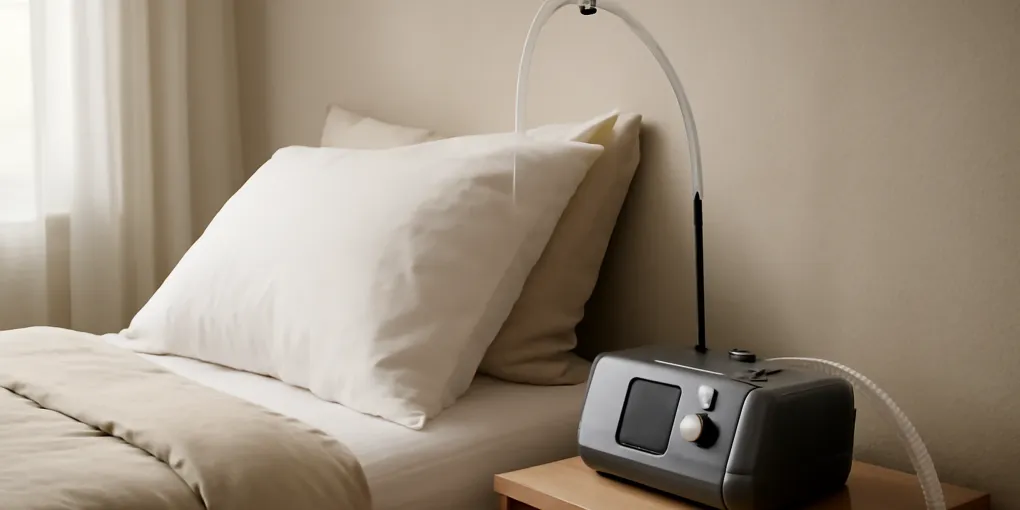
Quick picks
| Product | Key Specs |
|---|---|
| See price on Amazon |
|
| See price on Amazon |
|
| See price on Amazon |
|
Product availability, certifications, and retailer details can change; check the current Amazon page before buying.
A CPAP hose holder is a small sleep accessory with a very specific job: keep the tube from tugging on the mask when you roll onto your side. It should not change pressure settings, hide mask leaks, or turn an uncomfortable mask into the right mask. Its value is mechanical. The hose needs a smoother path from machine to face.
This protocol is for people who already use CPAP or another PAP device and wake because the tube drags across the pillow, falls behind the mattress, catches under a blanket, or pulls at the mask elbow. If your main problem is data tracking or choosing a sleep device, start with our sleep tracker buying guide. If the issue is pillow height, compare this setup with the adjustable pillow loft guide, because a tall pillow stack changes hose angle.
Hose-routing shortlist
| Buy/search action | Best fit | Main caveat |
|---|---|---|
| Search Amazon for CPAPology Houdini hose support | Side sleepers who need the hose to float above the pillow | Confirm the holder is stable with your mattress height and heated tube stiffness. |
| Search Amazon for Arden Innovations CPAP hose holder | Nightstand setups with predictable machine placement | Check behind-bed clearance and whether the stand can tip during a roll. |
| Search Amazon for CPAP hose lift travel stand | Travel, rentals, and rooms where you cannot attach hardware | Smaller stands may be easier to pack but less forgiving with thick pillows. |
Step 1: map the pull points before shopping
Set up the machine exactly as you use it at night. Put water in the humidifier only if that is part of your normal routine, place the machine on its usual side of the bed, and lie in your side-sleeping position with the mask connected. Roll from one side to the other and watch where the hose tightens.
The common pull points are predictable: the tube drops behind the mattress, crosses under the pillow, gets pinned by a blanket, or hangs from the mask elbow with no slack. A holder helps only when lifting or redirecting the hose removes that pull. If the mask seal fails even when you hold the hose in your hand with gentle slack, the first fix is mask fit, cushion size, headgear adjustment, or clinical support, not a stand.
Step 2: choose height and location
A good hose holder usually sits behind the pillow, beside the headboard, or just behind the nightstand. The hose should rise high enough to clear the pillow and shoulder, then fall toward the mask in a loose loop. It should not be stretched tight like a clothesline. That soft loop is what lets you turn without yanking the mask.
Measure from the mattress surface to the top of your pillow stack. Add the height of any wedge pillow or adjustable base position you actually use. A low holder can still work if it keeps the tube off the blanket, but side sleepers with broad shoulders or tall pillows often need more clearance. Heated tubing can also be stiffer than standard tubing, so check whether the stand route creates a kink or sharp bend.
Step 3: protect the machine and water chamber
The most important safety check is not complicated: the holder should never pull the CPAP machine toward the bed edge. Route the tube with enough slack that a full roll does not move the machine, tug the power cord, or tip a humidifier chamber. If the nightstand is narrow, move the machine farther from the edge before adding a hose lift.
Keep the air intake and vents clear. Do not bury the machine behind pillows, under the bed, inside a drawer, or under blankets to shorten the hose path. MedlinePlus CPAP home-care guidance emphasizes cleaning the mask, tubing, and humidifier parts as instructed, and that starts with keeping the device accessible enough to inspect, empty, dry, and maintain.
Practical score for this purchase
| Criterion | Weight | How to apply it to hose routing |
|---|---|---|
| Research | 30% | Identify the exact snag point: pillow, blanket, bed edge, headboard, or mask elbow. |
| Evidence quality | 25% | Trust manufacturer PAP instructions, sleep-clinic fit advice, and product dimensions over vague comfort claims. |
| Value | 20% | Buy the simplest stable holder that solves the pull before replacing masks or buying extra tubing. |
| User signals | 15% | Keep it only if you wake with fewer hose snags and the mask seal is no worse after several nights. |
| Transparency | 10% | Prefer listings that show height, base style, travel breakdown, and compatibility notes for heated tubing. |
Step 4: run the three-night side-sleeper test
Night one is the leak check. Fit the mask the same way you normally do, then use the holder without tightening headgear to compensate. In the morning, review your device app or provider report if you normally use one, and note whether leaks changed. A holder should reduce pull; it should not require cranking straps tighter.
Night two is the turn check. Pay attention to whether the hose follows you when you roll or whether it catches at the holder. Move the stand a few inches at a time rather than changing everything. A holder behind the pillow often works better than one directly beside the ear because it lets the tube arc over the bed instead of brushing your face.
Night three is the maintenance check. Can you disconnect the hose, empty the water chamber, wipe the nightstand, and rebuild the bed without fighting the stand? If the holder makes daily cleaning more annoying, you may stop using it. A useful setup should make PAP therapy quieter and less fussy, not add another fragile obstacle.
When a hose holder is the wrong fix
Skip the holder as the primary fix if the mask leaks in every position, the cushion leaves painful marks, the hose fills with condensation, or prescribed pressure feels intolerable. Those are therapy-support problems. Contact your sleep clinic, durable medical equipment provider, or prescribing clinician rather than trying to solve them with furniture routing.
Also skip clamps or improvised hooks that pinch the tubing. A smooth guide is better than anything with a sharp edge. Do not hang the hose from a ceiling fan, hot lamp, unstable shelf, or anything that could fall onto the bed. Renters and travelers should choose a freestanding or temporary option instead of adhesive hardware that can fail or damage a wall.
CPAP Hose Holder FAQ
Do side sleepers need a CPAP hose holder?
Some do, some do not. A holder is worth trying when the hose repeatedly drags across the pillow, tugs at the mask, or gets trapped under bedding during side-to-side turns. If the mask is comfortable and the hose already moves freely, skip the accessory.
Where should a CPAP hose holder sit?
Start behind or slightly above the pillow on the machine side of the bed, then leave a soft loop of hose between the holder and mask. The route should let you roll without moving the machine or bending the tube sharply.
Can a hose holder replace a mask refit?
No. A holder can reduce hose pull, but it cannot correct the wrong cushion size, worn headgear, pressure discomfort, or persistent leaks. Treat it as a routing tool and ask your sleep provider for fit help if comfort or leak problems continue.
Sources
- American Academy of Sleep Medicine PAP therapy overview
- NHLBI CPAP overview
- MedlinePlus using CPAP at home
Frequently Asked Questions
- Not always, but a holder can help when the hose drags across the pillow, pulls at the mask elbow, or wakes you during position changes.
- Place it so the hose rises behind or beside the pillow, leaves a soft loop near the mask, and cannot pull the machine or water chamber off the nightstand.
- No. If leaks, skin pressure, or therapy discomfort persist, use the holder only as a routing aid and ask your sleep clinic or equipment provider about mask fit.